Home        About        Adventure Education          Resources for Students        Parent Resources       Information
Showing posts with label reading strategies. Show all posts

Tuesday, September 29, 2015

Reading Fluently

We have spent the last few weeks learning strategies or tools to help us decode or figure out words that we don't know.


While we will still continue to practice these strategies, our new focus is on reading fluently. Fluency is the ability to read in a smooth, flowing, connected way. This includes reading with expression and reading at a conversational pace. Reading fluently is important because it directly impacts reading comprehension. When we can read fluently we understand what we are reading better. We will work on reading in phrases rather than word by word (robot reading), reading at a "just right" speed - not too fast and not too slow, reading with expression (showing emotion when reading) and using punctuation marks as a guide to how our voice should sound.

Rereading helps with reading fluency a lot. Each time we reread a story or book, we get more fluent. It also helps to listen to a more experienced reader read fluently to get the feel of how reading should sound. So family read alouds, bedtime stories and audio books are great to use.

Reading fluently is another reason why we need to help our kids make good book selections. If they are choosing books that are too hard, they will not read fluently and will read word by word (robot reading). Then they will not deeply understand the book that they are reading and will feel frustrated with reading. So encourage your child to read easy or just right books to help with fluency and comprehension. Also encourage them to reread a story or parts of a story to make it sound more fluent. Make practice fun by showing them how reading sounds when you read to fast or too slow. After the giggles stop, see if they know what you should do to correct your reading.

Homework
Read a good book or two.
Math test tomorrow. Practice some of the skills listed on this post or use some of the practice pages I emailed home earlier.

Boot Camp ~ Click here for more information about our Boot Camp fundraising drive and/or click here to make a donation. 


Wednesday, February 19, 2014

Predictions

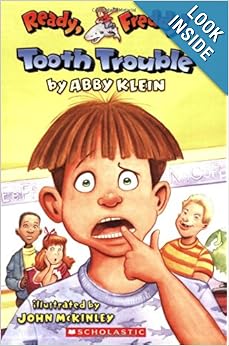
We finished the book we were reading, Andy Shane and the Very Bossy Delores Starbuckle and have started a new chapter book. This one is from the Ready Freddy series and is called Ready Freddy: Tooth Trouble. The book has us naturally making predictions about what we think will happen next and this is exactly what reading skill we are working on. In this book, Freddy is the only one in his class who hasn't yet lost a tooth and this makes him feel very left out. It is a very funny and engaging book and the crew groans when we stop at the end of each chapter - they want to keep reading. (This is also exactly what you want to happen when you read a book aloud.) At the end of each chapter, we talk about what we think will happen next or make predictions about the rest of the story. There are lots of other books in this series if you are looking for some good books to read aloud to your child at home.


New Stations
We started two new stations today. One using magnets and one using packing materials. Both were big hits today.
Building with magnets.

Building and creating with packing materials.

Homework
Reading ~ Read a good book or two.
Math ~ Home Link 6.9 More Counting Coins

Library
We have library tomorrow. Please help your child remember to return his or her library books.

Friday, September 27, 2013

Tools for Reading

We have been learning that readers and writers need to be brave when they are reading and writing and try to figure out words that they don't know. We have talked how we need to have a toolbox of things to try when we come upon a word that we don't know. We can't just ask someone to tell us the word every time and "sounding it out" doesn't always work. We have been learning a list of other tools (strategies) that we can use when we come upon a word that we can't read.

We try to think like a detective and look at clues that will help us figure out what the unknown word might be. Sometimes we have to use several clues to figure out just one word. We have our toolbox of strategies posted above the whiteboard in our room so that we can refer to it if we need help. I will be emailing a more detailed copy of this list to parents, too, so you can help your child use these tools at home. (Please remind me if I happen to forget.) You can click on the picture to see a larger version.


 Can your child:
  • count by 2s, 5s and 10s?
  • tie his or her shoes?
  • write his or her last name?

Homework
No homework for the weekend. Enjoy some good books with your child and check to see how many things on the list above your child can do. These would be great things to work on this weekend, too.

IA (Integrated Arts)
Our IA next week is Art.


Thursday, September 15, 2011

Crew News September 15, 2011

Reading Strategies
As children are learning to read, we want them to develop some strategies to use when they come to words that they don't know as they are reading. We don't want them to become dependent on having someone else tell them a word that they don't know. We are currently starting a unit on strategies to try when you come to an unknown word. We are learning many strategies and how to be flexible in using them. Different strategies will work in different situations and sometimes a reader must use more than one strategy to figure out a word.

An example of a very early reading strategy is to look at the picture. When reading you must hunt for clues like a detective and in early reading books, the pictures will have good clues about unknown words.

Another example of a reading strategy would be to think about what the story is about to help solve an unknown word. For example, if the story is about a birthday party you might expect to find words like: presents, gifts, wrapping paper, birthday cake, etc. Thinking about what words could be in a story and then looking at the letters in an unknown word can help a child figure those tough words.

In your email tonight is a list of strategies that we are working on in class to help us all become better word detectives. This list will help you with ways to help your child as they are reading.


Homework 
Reading ~ Read a good book or two.
Math ~ Home Link 2.9 Counting by 5s